
Zoning Code Update for Accessory Dwelling Units (ADUs)

Share Zoning Code Update for Accessory Dwelling Units (ADUs) on Facebook Share Zoning Code Update for Accessory Dwelling Units (ADUs) on X (formerly Twitter) Share Zoning Code Update for Accessory Dwelling Units (ADUs) on Linkedin Email Zoning Code Update for Accessory Dwelling Units (ADUs) link

The city is proposing an amendment to the Unified Development Ordinance (UDO) related to Accessory Dwelling Units (ADUs). The major changes include:

  • Expanding ADUs citywide.
  • Increasing the allowable ADU types to include internal, attached and detached.
  • Developing high-quality architectural and use standards.
  • Moving to administrative approvals for the three types through a building permit.

What is an Accessory Dwelling Unit?

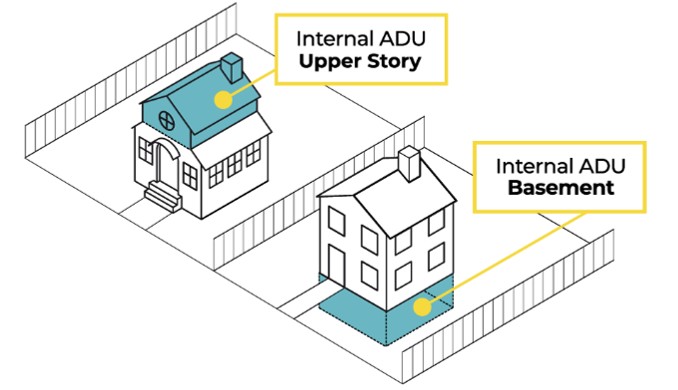
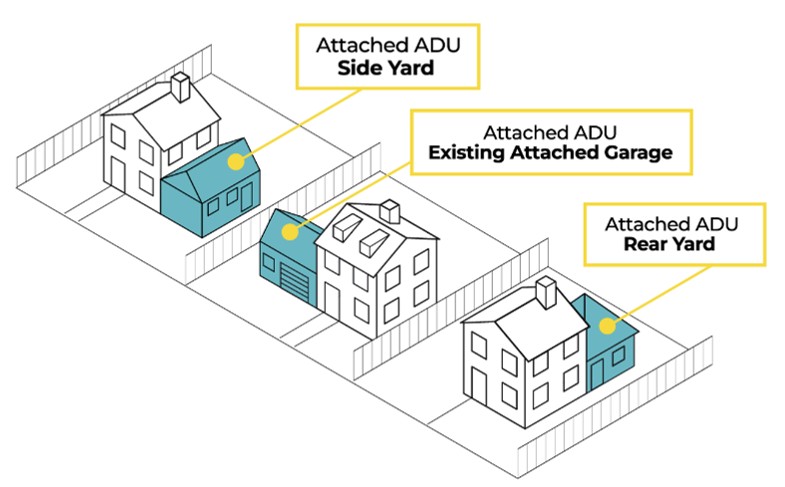
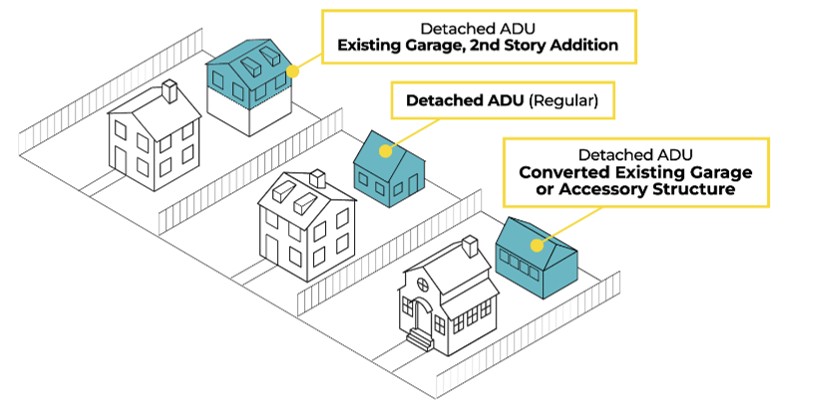
ADUs are smaller living spaces accessory to the primary dwelling or home that is designed to provide independent housing, and typically includes a kitchen, bedroom, bathroom and living area. ADUs may also be known as a granny flat or an in-law suite. ADUs are often used for a variety of purposes, such as rental income, housing family members or as an affordable housing option. Common types of ADUs include garage conversions, basement apartments, and small, standalone detached units. An ADU can be internal, attached or detached from the dwelling as demonstrated in the graphics below.


Benefits of ADUs

Accessory Dwelling Units offer a variety of benefits to both homeowners and the broader community. For homeowners, ADUs can provide an opportunity for rental income, which can help offset mortgage costs or increase property value. They also offer a flexible housing solution for family members, such as aging parents or adult children, allowing them to live nearby while maintaining privacy. For the city as a whole, ADUs can help address housing shortages by creating more affordable living options without the need for large-scale new developments. Additionally, they promote sustainable growth by utilizing existing infrastructure and reducing urban sprawl. Overall, ADUs contribute to a more diverse, resilient, and connected community.

The zoning code update furthers the vision and goals of the Aurora Places comprehensive plan. Aurora Places acts as a guide to provide a long-term vision for the future of land use within Aurora’s community. One of the seven goals from Aurora Places is Housing for All. High-quality housing options enable people across all socioeconomic levels, cultural identities and stages of life to establish and manage households. Several strategies from this goal that relate to ADUs are listed below:

  • Integrate housing of varying types and prices into placetypes throughout the city to create lively and diverse neighborhoods.
  • Allow accessory dwellings to accommodate extended family arrangements or generate income to accommodate rising housing prices.
  • Encourage the construction or rehabilitation of homes for downsizing households, including single-story, shared housing, multigenerational and other older-adult friendly housing types.
  • Promote resource-efficient development.

Where are ADUs currently allowed in the city? How is that changing?

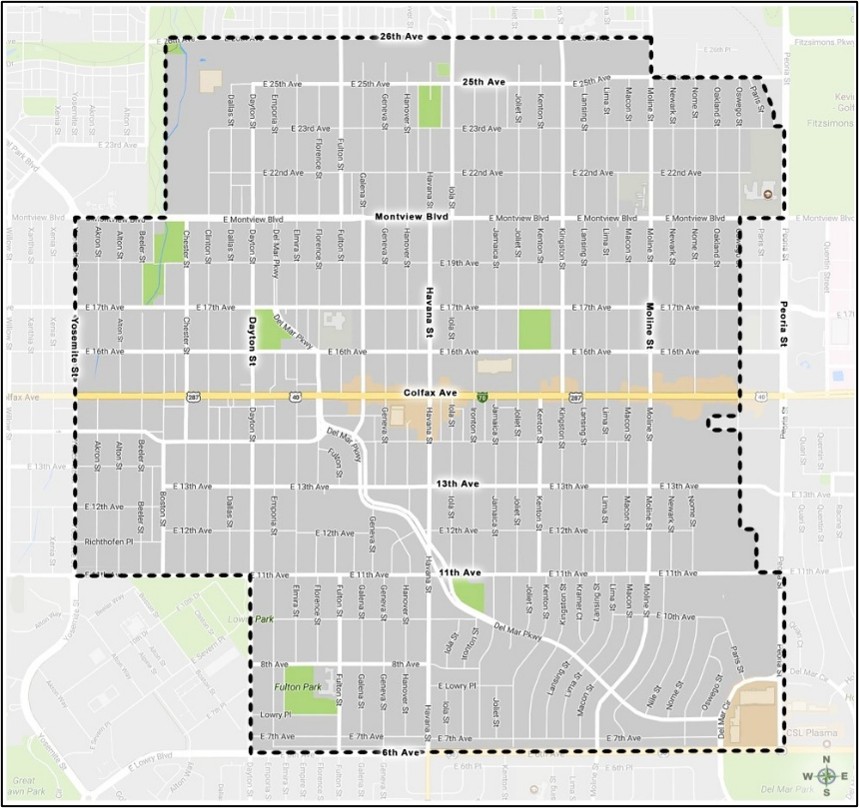
Currently, ADUs are permitted in three zone districts: OA-R1, OA-R2 and OA-RMU.

The amendment of the code will result in ADUs being permitted on all lots with single-family detached homes.

The city has permitted detached-only ADUs since 2018.

  • Permitted within Original Aurora
  • Require conditional use permit with a public hearing (approved by Planning and Zoning Commission)
  • Use-specific standard requirements apply

The city is proposing an amendment to the Unified Development Ordinance (UDO) related to Accessory Dwelling Units (ADUs). The major changes include:

  • Expanding ADUs citywide.
  • Increasing the allowable ADU types to include internal, attached and detached.
  • Developing high-quality architectural and use standards.
  • Moving to administrative approvals for the three types through a building permit.

What is an Accessory Dwelling Unit?

ADUs are smaller living spaces accessory to the primary dwelling or home that is designed to provide independent housing, and typically includes a kitchen, bedroom, bathroom and living area. ADUs may also be known as a granny flat or an in-law suite. ADUs are often used for a variety of purposes, such as rental income, housing family members or as an affordable housing option. Common types of ADUs include garage conversions, basement apartments, and small, standalone detached units. An ADU can be internal, attached or detached from the dwelling as demonstrated in the graphics below.


Benefits of ADUs

Accessory Dwelling Units offer a variety of benefits to both homeowners and the broader community. For homeowners, ADUs can provide an opportunity for rental income, which can help offset mortgage costs or increase property value. They also offer a flexible housing solution for family members, such as aging parents or adult children, allowing them to live nearby while maintaining privacy. For the city as a whole, ADUs can help address housing shortages by creating more affordable living options without the need for large-scale new developments. Additionally, they promote sustainable growth by utilizing existing infrastructure and reducing urban sprawl. Overall, ADUs contribute to a more diverse, resilient, and connected community.

The zoning code update furthers the vision and goals of the Aurora Places comprehensive plan. Aurora Places acts as a guide to provide a long-term vision for the future of land use within Aurora’s community. One of the seven goals from Aurora Places is Housing for All. High-quality housing options enable people across all socioeconomic levels, cultural identities and stages of life to establish and manage households. Several strategies from this goal that relate to ADUs are listed below:

  • Integrate housing of varying types and prices into placetypes throughout the city to create lively and diverse neighborhoods.
  • Allow accessory dwellings to accommodate extended family arrangements or generate income to accommodate rising housing prices.
  • Encourage the construction or rehabilitation of homes for downsizing households, including single-story, shared housing, multigenerational and other older-adult friendly housing types.
  • Promote resource-efficient development.

Where are ADUs currently allowed in the city? How is that changing?

Currently, ADUs are permitted in three zone districts: OA-R1, OA-R2 and OA-RMU.

The amendment of the code will result in ADUs being permitted on all lots with single-family detached homes.

The city has permitted detached-only ADUs since 2018.

  • Permitted within Original Aurora
  • Require conditional use permit with a public hearing (approved by Planning and Zoning Commission)
  • Use-specific standard requirements apply


Do You Have a Question?

If you have a question about this project, please submit it to us for a response.

Email
loader image
Didn't receive confirmation?
Seems like you are already registered, please provide the password. Forgot your password? Create a new one now.
Page published: 04 Aug 2026, 12:52 PM